If you are pricing out an insulation project this year, one question comes up almost immediately. What is the actual spray foam insulation cost per square foot, and why does it seem to vary so much from one quote to the next. The short answer is that spray foam pricing depends heavily on the type of foam, the thickness applied, and the complexity of your space, which is why two homeowners with similar sized attics can end up with very different bills.
This guide breaks down what you can realistically expect to pay in 2026, what actually drives that price, and how to avoid overpaying or underestimating your project budget.
Quick Answer: Average Spray Foam Insulation Cost Per Square Foot
As a general starting point, most homeowners in 2026 can expect to pay somewhere between one dollar and three dollars and fifty cents per square foot installed, depending on whether they choose open cell or closed cell foam. Open cell foam tends to sit on the lower end of that range, while closed cell foam, thanks to its higher density and superior R value, sits toward the higher end. A full project, rather than just a per square foot figure, typically lands anywhere from a couple thousand dollars for a small attic to well over ten thousand dollars for a whole home retrofit with closed cell foam.
Keep in mind that these numbers shift based on your region, local labor rates, and the specific scope of the job, so treat any general figure as a starting point rather than a final quote.
Open Cell vs Closed Cell: Why the Price Gap Exists
Before getting into specific numbers, it helps to understand why open cell and closed cell foam are priced so differently.
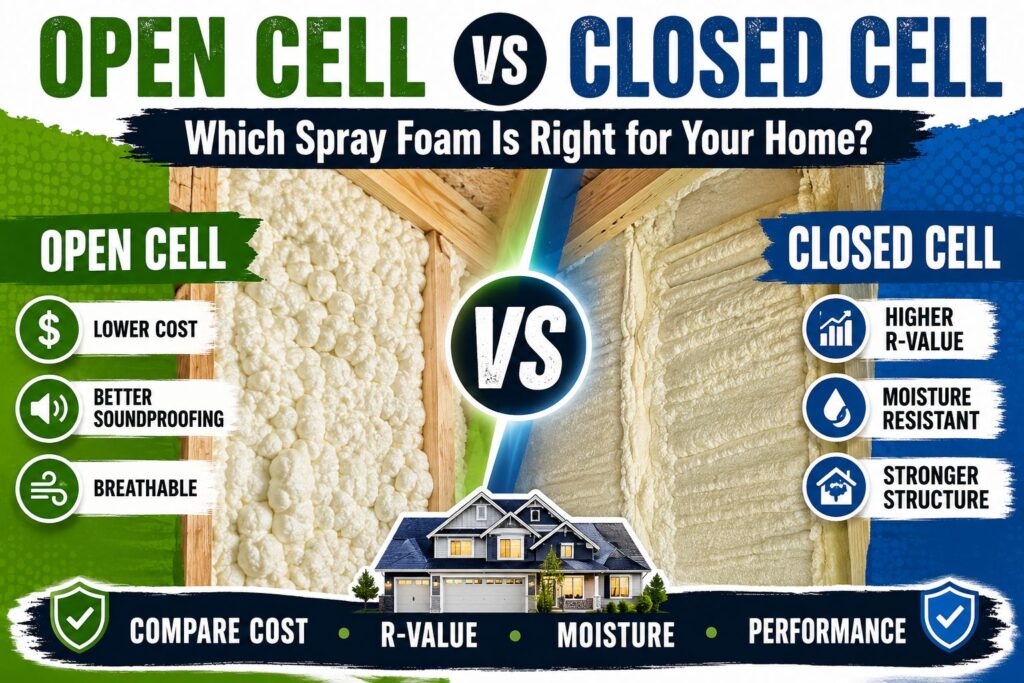
Open cell spray foam is lighter, less dense, and generally cheaper to produce. It has a lower R value per inch compared to closed cell foam, which means you typically need a thicker application to hit the same insulation target. It also allows some vapor to pass through, which makes it a poor choice for areas with major moisture concerns.
Closed cell spray foam is denser, more rigid, and offers a much higher R value per inch, often close to double that of open cell foam. It also acts as its own vapor barrier and adds a meaningful amount of structural rigidity to the area it is applied to. All of that performance comes at a materials cost, which is why closed cell foam commands a noticeably higher price per square foot.
Typical Spray Foam Insulation Cost Per Square Foot by Type
Open cell foam generally runs from around one dollar to one dollar and fifty cents per square foot installed for a standard application thickness, though pricing can dip lower for large, simple attic spaces or run higher for tricky access points.
Closed cell foam generally runs from around one dollar fifty cents to three dollars and fifty cents per square foot installed, with the higher end reflecting thicker applications, exterior wall work, or areas requiring a strong air and moisture barrier.
For perspective, a 1,500 square foot attic insulated with open cell foam might land somewhere in the range of 1,800 to 3,000 dollars, while the same space done in closed cell foam could run anywhere from 3,000 to 6,500 dollars or more, depending on thickness and accessibility.
What Actually Drives Spray Foam Insulation Cost
The per square foot number is only part of the story. Several factors combine to determine your final project cost.
Foam Type and Thickness
As covered above, closed cell foam costs more per square foot than open cell foam, and thicker applications of either type will naturally cost more since more material and labor time go into the job.
Area Being Insulated
Attics, crawl spaces, exterior walls, and rim joists all present different levels of difficulty. A wide open, easily accessible attic is typically the cheapest area to insulate per square foot, while tight crawl spaces or finished walls that require cutting into drywall tend to push costs higher.
New Construction vs Retrofit
Spray foam installed during new construction, when walls and cavities are fully open, is almost always cheaper than retrofitting an existing home. Retrofits often require additional labor for accessing cavities, protecting finished surfaces, and cleaning up afterward.
Regional Labor Rates
Labor costs vary significantly by location. Metro areas with a higher cost of living typically see higher spray foam installation rates than rural areas, even for identical scopes of work.
Job Size
Larger jobs often benefit from a lower effective price per square foot, since fixed costs like equipment setup and travel get spread across more coverage area. Very small jobs sometimes carry a minimum service charge that can make the effective per square foot cost higher.
Prep Work and Access
Jobs that require removing old insulation, sealing extensive gaps, or working around obstacles like ductwork and wiring will generally cost more than a straightforward, open cavity application.
Sample Cost Scenarios for 2026
To make these numbers more concrete, here are a few realistic scenarios homeowners might encounter this year.
Small attic, open cell foam. A 1,000 square foot attic with easy access and standard framing might cost somewhere in the range of 1,200 to 2,000 dollars using open cell foam at a standard thickness.
Mid sized attic, closed cell foam. The same 1,000 square foot attic done with closed cell foam for higher R value and moisture resistance might run closer to 2,000 to 3,500 dollars.
Whole home retrofit, mixed foam. A 2,000 square foot home combining open cell in the attic and closed cell in exterior walls and rim joists could realistically fall anywhere between 6,000 and 14,000 dollars, depending on regional rates and access complexity.
New construction project. Spraying foam into open wall cavities and attic space during new construction, before drywall goes up, tends to be more efficient and can come in noticeably lower per square foot than an equivalent retrofit.
Is Spray Foam Worth the Cost Compared to Traditional Insulation
Spray foam almost always costs more upfront than fiberglass batts or blown in cellulose. However, it also delivers a much tighter air seal, which can significantly cut energy bills over time. Many homeowners find that the reduced heating and cooling costs, combined with fewer drafts and better moisture control, help offset the higher initial investment over several years of ownership.
Whether spray foam is worth it for your specific home depends on factors like your climate, how leaky your current envelope is, and how long you plan to stay in the home. In colder or more extreme climates, the payback period tends to be shorter, since the energy savings add up faster.
How to Get an Accurate Quote
Ballpark numbers are useful for early budgeting, but the only way to know your real cost is to get quotes based on your specific space. A few tips can help you get accurate, comparable estimates.
- Get at least two or three quotes from licensed spray foam installers in your area, since pricing can vary meaningfully between contractors.
- Ask each contractor to specify open cell versus closed cell pricing separately, since some quotes bundle both without a clear breakdown.
- Confirm the intended thickness in inches for each area, since a thin application will cost less but may not deliver the R value you actually need.
- Ask whether the quote includes prep work, cleanup, and disposal of any old insulation, since these can add unexpected costs if left out of the initial number.
- Request references or examples of similar sized projects, so you can compare real world outcomes rather than relying purely on a per square foot estimate.
Ways to Manage Spray Foam Insulation Costs
If your budget is tight, there are still ways to get meaningful benefits from spray foam without paying for a full closed cell whole home retrofit.
Consider using closed cell foam only in the areas where moisture control and higher R value matter most, such as rim joists, exterior walls, and crawl spaces, while using more affordable open cell foam or traditional insulation in less critical areas like interior partition walls.
Timing your project alongside other renovation work, such as a roof replacement or an addition, can also reduce costs since access is often already open, cutting down on the labor needed to reach certain cavities.
Frequently Asked Questions
What is the average spray foam insulation cost per square foot in 2026?
Most homeowners can expect to pay between one dollar and three dollars and fifty cents per square foot installed, with open cell foam on the lower end and closed cell foam on the higher end, depending on region and project specifics.
Why is closed cell spray foam more expensive than open cell?
Closed cell foam is denser, offers a higher R value per inch, and acts as its own vapor barrier, all of which require more material and add structural rigidity, which increases the overall material and labor cost.
Is spray foam insulation worth the higher cost compared to fiberglass?
For many homeowners, yes, especially in colder climates, since the tighter air seal spray foam provides can lead to meaningful energy savings over time that help offset the higher upfront investment.
How much does it cost to spray foam a 2000 square foot house?
Depending on foam type, thickness, and accessibility, a full 2,000 square foot home project can range anywhere from around 6,000 to 14,000 dollars or more, especially if closed cell foam is used in exterior walls and rim joists.
Does spray foam cost less during new construction than a retrofit?
Yes, spray foam applied during new construction, while wall and attic cavities are fully open, is typically cheaper per square foot than retrofitting an already finished home, since retrofit work requires additional labor for access and cleanup.
Can I mix open cell and closed cell foam in the same project to save money?
Yes, many homeowners use closed cell foam strategically in high priority areas like rim joists and exterior walls, while using open cell foam or traditional insulation elsewhere, which can help balance performance and cost.
How do I know if a spray foam quote is fair?
Compare multiple quotes, confirm the foam type and thickness specified in each one, and check that prep, cleanup, and disposal are included, so you are comparing equivalent scopes of work rather than mismatched estimates.
Final Thoughts
Spray foam insulation cost per square foot in 2026 still comes down to a handful of core variables, foam type, thickness, area complexity, and your local labor market. While closed cell foam costs more upfront than open cell, its higher R value and built in moisture resistance often make it the better long term choice for critical areas like rim joists and exterior walls.
Rather than chasing the lowest possible per square foot number, focus on getting a detailed, apples to apples quote that specifies exactly what foam type, thickness, and coverage you are paying for. That approach will give you a far more accurate picture of your total investment than any general price range ever could.
Get free quotes from spray foam pros — about a minute, no obligation.
Get free quotesAsk the forum. Applicators and building pros answer — no account needed.
Ask a pro