Closed cell ≈ R-6.9 per inchOpen cell ≈ R-3.7 per inchENERGY STAR: ~15% avg. heating & cooling savings from sealing + insulatingInstalled: about $1.00 – $3.50 per sq ft36 discussions across 8 forumsMany attics are done in a single dayClosed cell ≈ R-6.9 per inchOpen cell ≈ R-3.7 per inchENERGY STAR: ~15% avg. heating & cooling savings from sealing + insulatingInstalled: about $1.00 – $3.50 per sq ft36 discussions across 8 forumsMany attics are done in a single day
Flip between before and after, tap a hotspot, and pick your state for ENERGY STAR’s recommended insulation levels where you live.
Heat escapingCold air leaking inSpray foam
Attic targetR-49–60
Floor targetR-13–38
Avg. savings15%
Attic & roof deck
Why it leaks. Warm air rises and slips out through ceiling gaps, can lights, top plates and the attic hatch. In summer the attic bakes and pushes heat back down.
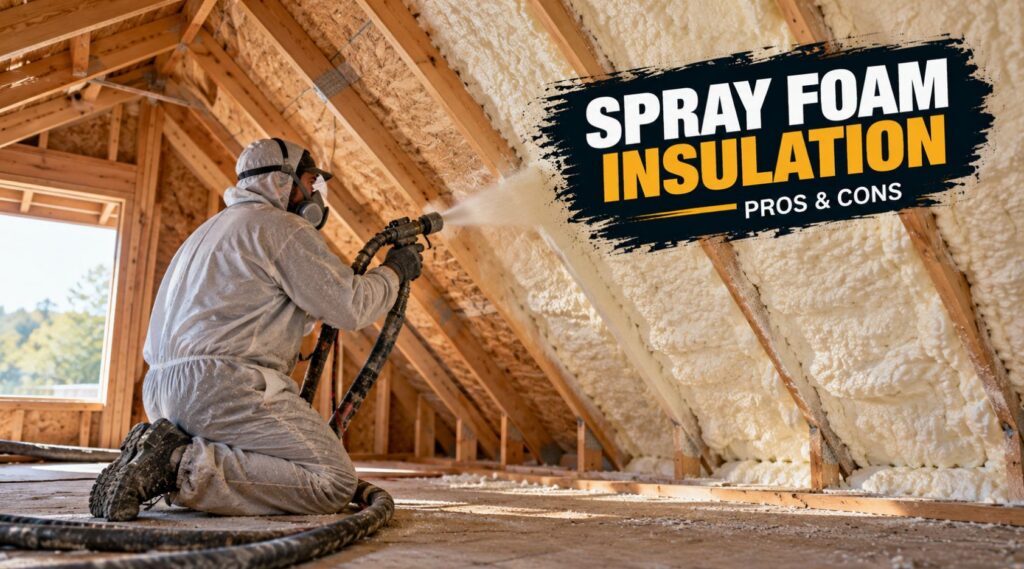
The foam fix. Spray the underside of the roof deck to create a sealed, conditioned attic — or seal and insulate the attic floor. Open cell is common; closed cell is used where moisture control matters.
Exterior walls
Why it leaks. Batts leave gaps around outlets, wiring, plumbing and odd framing. Every gap is a path for air — and air carries most of the heat.
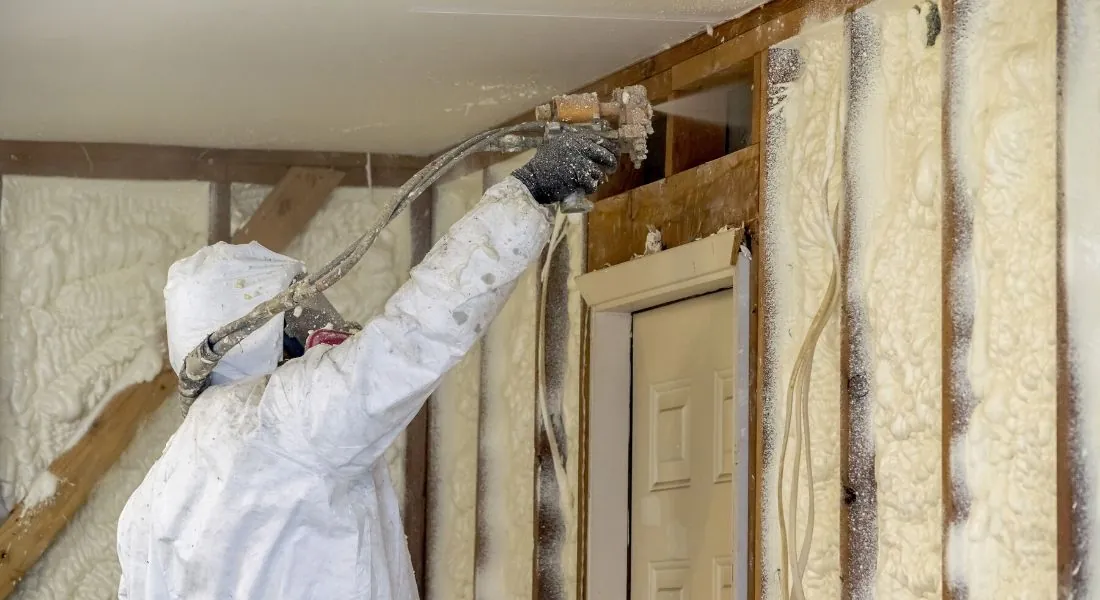
The foam fix. Foam expands to fill the whole cavity and air-seals as it cures. Closed cell packs the most R-value into a 2x4 wall; open cell is a budget-friendly full fill in new construction.
Rim joists
Why it leaks. The band where the house sits on the foundation is one of the leakiest spots in most homes — and one of the fastest, cheapest fixes.
The foam fix. A few inches of closed cell seals and insulates the rim in one pass. ENERGY STAR specifically calls out accessible basement rim joists.
Crawl space & floors
Why it leaks. Cold, damp crawl space air chills the floors above and feeds moisture and odors into the house through the stack effect.
The foam fix. Closed cell on the crawl space walls and rim (with a ground vapor barrier), or under the floor, keeps floors warmer and moisture out.
Targets are ENERGY STAR’s recommended levels for existing homes (R-value table); savings are its modeled average for air sealing plus insulation (methodology). Zone shown is typical for most of your state.
Typical values side by side — and a quick finder for where each one belongs.
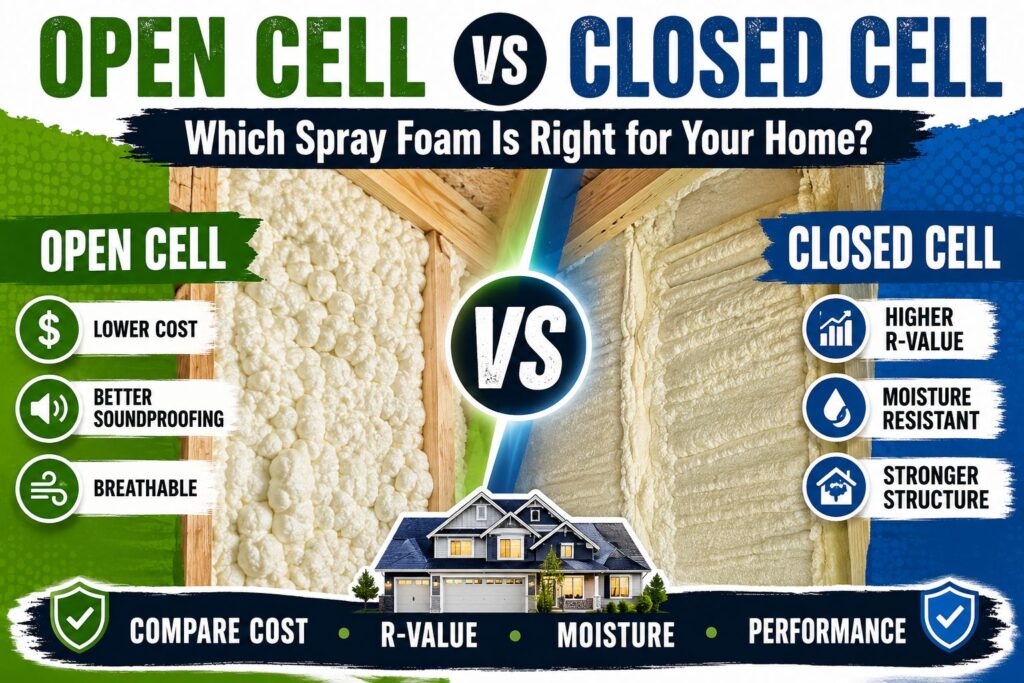
Open cell
Soft, breathable, budget-friendly
R-value per inch
≈ R-3.5 – 3.8
Density
≈ 0.5 lb/ft³
Installed cost / sq ft
$1.00 – $1.50
Sound dampening
Excellent
Vapor control
Lets vapor pass
Adds rigidity
No
Great for: attic roof decks in mild and mixed climates, interior walls, soundproofing, big open new-build cavities.
Closed cell
Dense, strong, moisture-resistant
R-value per inch
≈ R-6 – 7
Density
≈ 1.7 – 2.0 lb/ft³
Installed cost / sq ft
$1.50 – $3.50
Sound dampening
Good
Vapor control
Vapor retarder at ~1.5–2 in
Adds rigidity
Yes — stiffens the assembly
Great for: crawl spaces, rim joists, basements, metal buildings and pole barns, cold climates and anywhere you need max R in a thin wall.
Foam finder
Where is the foam going?
Our pickOpen cell, usually
Open cell is the most common choice under the roof deck in mild and mixed climates. In colder zones, or where the roof deck needs extra moisture protection, many pros use closed cell or a closed-cell flash coat.
Savings use ENERGY STAR’s modeled average for air sealing plus insulating attics, floors over crawl spaces and rim joists in your climate zone (methodology). Costs use this site’s 2026 installed-price ranges. Your home will differ.
The community
Every corner of the trade.
From the first pass to the final invoice — pick a forum and jump in.
Powers the proportioner’s heaters and pumps. It has to be sized to the reactor’s full heat load, plus the compressor and lights.
Air compressor & dryer
Clean, dry air for the gun and the transfer pumps. Moisture is the enemy — wet air contaminates the ISO side and ruins foam.
Proportioner (reactor)
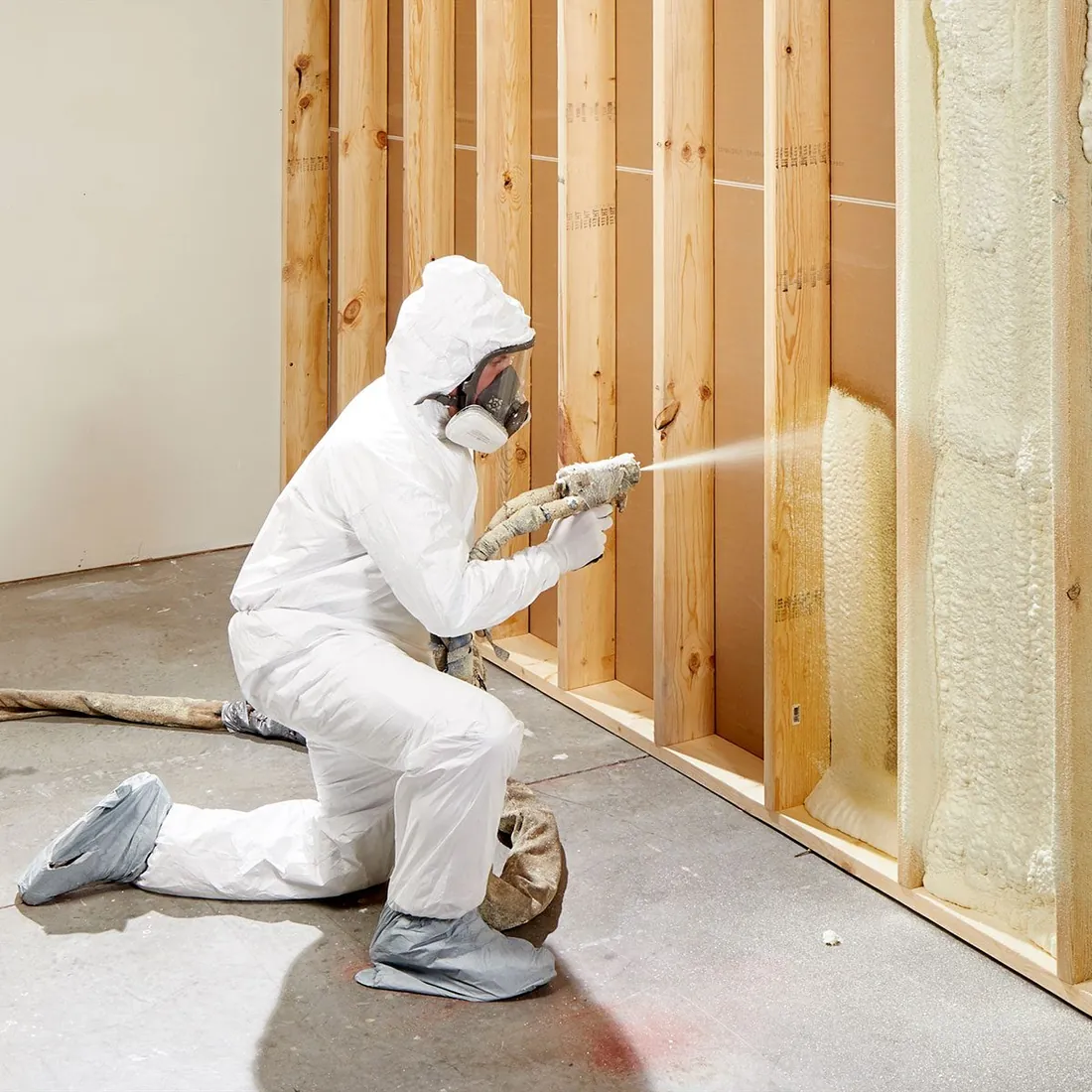
The heart of the rig. It meters the A and B sides at the right ratio, heats them and builds spray pressure. Most field problems start with ratio, heat or pressure here.
Heated hose
Keeps both sides at spray temperature all the way from the rig to the gun, so the foam reacts the same at the end of the hose as at the start.
A & B drums + transfer pumps
ISO (A side) and resin (B side) feed the proportioner. Store them in the manufacturer’s temperature range, keep the ISO dry, and mix the resin before you spray.
Spray gun
An impingement gun mixes the A and B sides at the tip. Clean mix, the right chamber size and a steady pass speed decide how the foam looks and performs.
Guides
Learn before you buy.
Plain-English guides on cost, foam types and what to ask your installer.
Most homeowners pay roughly $1.00 to $3.50 per square foot installed. Open cell usually lands around $1.00 to $1.50 and closed cell around $1.50 to $3.50, depending on thickness, access and your local labor rates. A small attic can be a couple thousand dollars; a whole-home retrofit with closed cell can run well past $10,000. Our cost calculator gives you a ballpark in seconds.
Open cell or closed cell — which one do I need?
Open cell is lighter, more affordable and great for sound, typically about R-3.5 to R-3.8 per inch. Closed cell is denser, roughly R-6 to R-7 per inch, adds rigidity and works as a vapor retarder at about 1.5 to 2 inches — which is why it is the usual pick for crawl spaces, rim joists, basements and metal buildings. Many homes use both.
How much can spray foam lower my energy bills?
ENERGY STAR estimates homeowners save an average of 15% on heating and cooling costs (about 11% of total energy costs) by air sealing and adding insulation in attics, floors over crawl spaces and accessible basement rim joists. Spray foam insulates and air-seals in one step. Results vary by home, climate and how leaky the house is today.
Is spray foam safe for my family?
Once fully cured, spray foam is an inert plastic. During spraying the chemicals are reactive, so occupants should stay out of the home while it is installed and for the re-entry period the manufacturer specifies — commonly around 24 hours. A good installer will tell you the product, the re-occupancy time and how they ventilate the space.
Can spray foam go over my existing insulation?
Usually not. Foam needs to bond directly to the framing, sheathing or roof deck to air-seal properly, so old batts or loose fill in the spray area are typically removed first. Your installer will look at what is there and quote any removal separately.
How long does a spray foam job take?
Many attics, crawl spaces and rim-joist jobs are finished in a single day. Whole-home projects often take one to three days depending on size, access and how much prep is needed.
How do I get quotes through Spray Foam Forum?
Answer a few quick questions on our free quote form. It takes about a minute, there is no obligation, and a spray foam specialist follows up to talk through your options.
I want to start spraying foam. Where do I begin?
Start with the equipment, training, chemistry supply, insurance and a plan for getting your first jobs. Our startup planner walks you through each piece and connects you with people who build rigs and train new applicators every day.
Popular:
Free · No obligation
Before you go — want a real number?
Leave your name, email and ZIP. A spray foam specialist will follow up with a ballpark for your project.